
Sugar-Based Preservation Helps CAR-T Cells Survive Freezing in Mouse Study
MIT researchers developed a cryopreservation method that uses trehalose and sucrose to reduce reliance on DMSO when storing and shipping CAR-T cells. In experiments, the preserved cells showed better survival after thawing and treated lymphoma and glioblastoma in mice, but the approach has not yet been tested in patients.
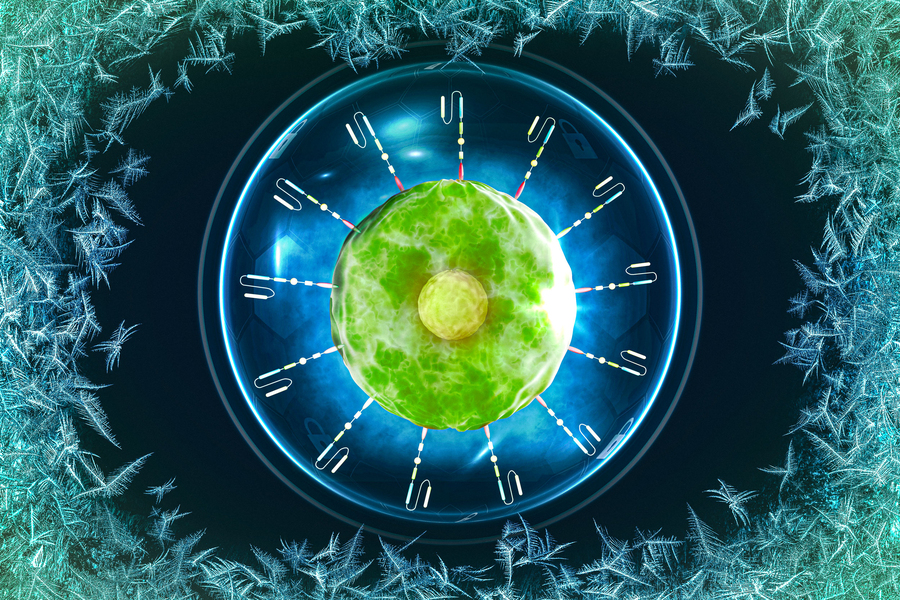
MIT researchers have developed a sugar-based method for preserving CAR-T cells during freezing and shipment, a step that could simplify how some hospitals receive and administer the cancer treatment. The technique improved cell survival after thawing and produced better outcomes than conventional preservation in mouse models of lymphoma and glioblastoma.
CAR-T therapy uses a patient’s T cells, which are engineered to carry chimeric antigen receptors designed to recognize specific cancer-cell proteins. After the engineered cells multiply, they are often frozen and transported from centralized manufacturing facilities to hospitals or cancer centers.
According to MIT News, only about 5 percent of hospitals in the United States currently have the ability to generate and deliver CAR-T cells. One obstacle is the use of dimethyl sulfoxide, or DMSO, a chemical preservative that helps prevent ice crystals from damaging cell membranes. DMSO must be removed before the cells are infused, and that additional processing can require specialized expertise and may damage some of the cells.
The MIT team instead focused on trehalose and sucrose, sugars that can help protect proteins and limit ice-crystal formation at low temperatures. Using electroporation, the researchers briefly opened pores in the cell membranes so the larger sugar molecules could enter the cells. The process still required a small amount of DMSO, but the researchers reported that the quantity was low enough that it did not need to be removed before use.
In experiments involving CAR-T cells and mesenchymal stem cells, a greater proportion of cells survived freezing and thawing when sugars served as the primary cryoprotectant rather than DMSO. The researchers also tested thawed CAR-T cells in mice with non-Hodgkin’s lymphoma or glioblastoma. Mice receiving cells preserved with the new method had higher survival rates than those treated with cells stored using the conventional DMSO-based approach.
The findings, published in Trends in Biotechnology, are preclinical. The study did not establish whether the method is safe or effective in patients, nor whether hospitals can incorporate it into routine CAR-T manufacturing and treatment workflows. The researchers said they plan to work with hospitals to assess whether the process can be integrated into cell production and thawing procedures. A small patient trial could follow if those evaluations show that the preserved cells retain adequate viability and function.
Vijay G. Sankaran of Boston Children’s Hospital and Harvard Medical School, who was not involved in the research, described the approach as potentially useful for cell therapies that depend on freezing large numbers of cells. He also emphasized that additional validation would be needed before clinical application.
The study’s authors included MIT researchers Ana Jaklenec, Robert Langer, Amy Lee, and Khanh Tran. The work was supported by postdoctoral fellowships from the Ludwig Center at MIT’s Koch Institute and the Convergence Scholars Program at the MIT Marble Center for Cancer Nanomedicine.
Reporting Note
Biohack Report distinguishes preliminary findings, clinical evidence and commercial claims whenever the available reporting supports that distinction. Coverage is informational and is not medical advice.