Endocannabinoid Levels Rose During Marathon and Ultramarathon Running
A study published in BMC Medicine tracked endocannabinoids during a marathon and after ultramarathon races of up to 230 kilometers. Anandamide levels rose throughout the marathon and remained elevated during recovery, while ultramarathon runners also showed increases in 2-AG. The findings offer new detail on the biology of the “runner’s high,” but do not establish that these molecules cause it.
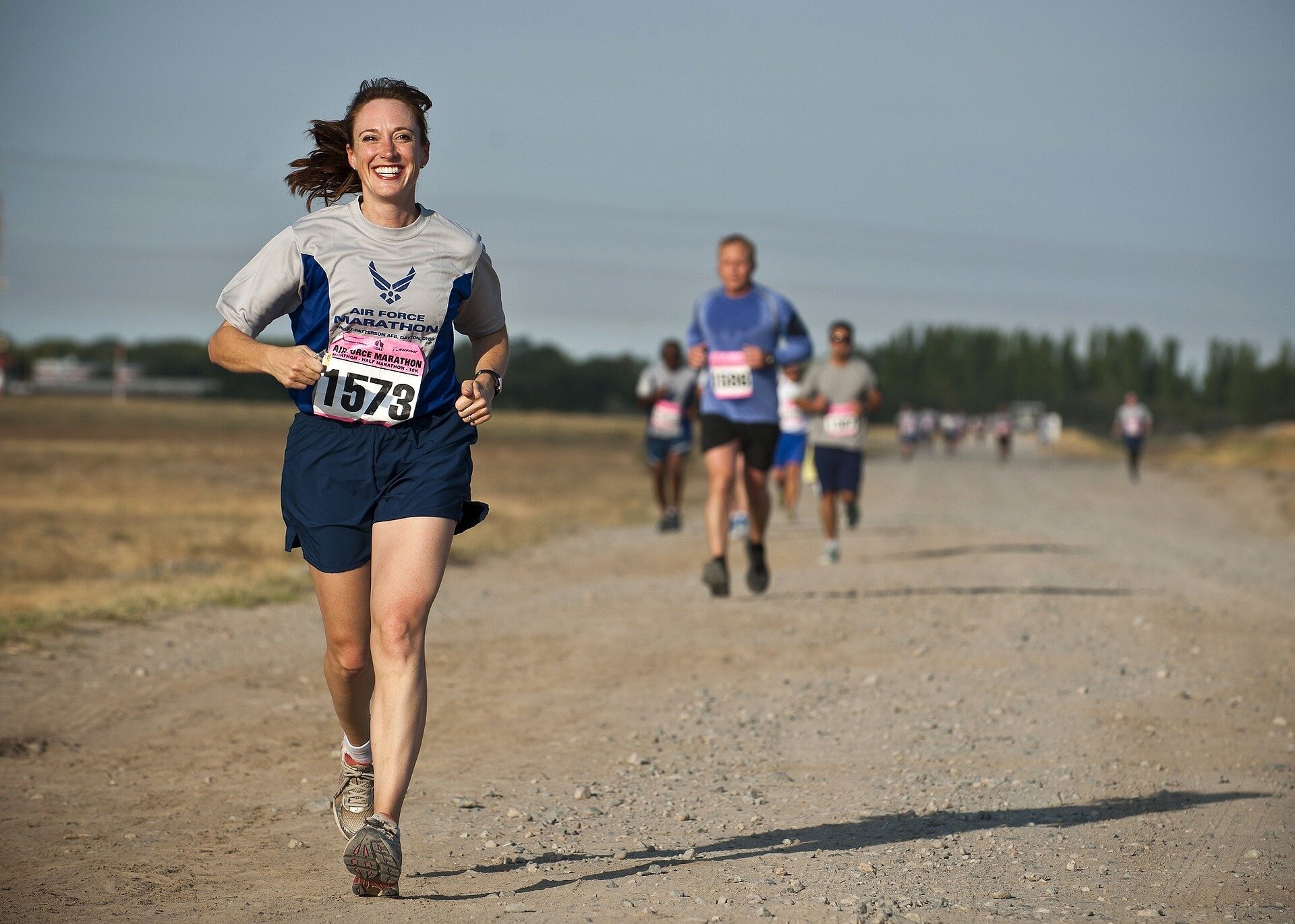
Endocannabinoids—cannabis-like signaling molecules produced by the body—rose during marathon and ultramarathon running, according to a study published in BMC Medicine. The research tracked these molecules across races lasting from marathon distance to 230 kilometers, while also examining reported anxiety, euphoria and pain.
The study involved two field investigations. In the marathon portion, 19 experienced runners completed a course around Lake Baldeney in Essen, Germany. Blood samples were collected before the race, after 14 and 28 kilometers, at approximately 43 kilometers, and again following 45 minutes of recovery. The same participants later walked the route for the amount of time they had needed to complete the marathon, providing a comparison with lower-intensity activity over a similar duration.
Anandamide, or AEA, showed the clearest pattern. Its concentration continued to increase as the marathon progressed, rather than rising only at the beginning, and remained elevated after the recovery period. The change during walking was considerably smaller, according to the researchers.
The second investigation examined 36 participants in the 2024 TorTour de Ruhr ultramarathon. The runners completed distances of 100, 160 or 230 kilometers, with blood samples taken before and after their races. AEA levels were significantly higher after the ultramarathons, and levels of another endocannabinoid, 2-AG, also increased.
After finishing, the ultramarathon participants reported less anxiety. Euphoria did not change significantly. Most participants said they experienced pain during the run, while five reported remaining pain-free.
The findings build on earlier work by the same research group. A 2015 study reported that running’s anxiety- and pain-reducing effects depended on cannabinoid receptors. In a 2021 study of 63 people, the researchers reported that the runner’s high persisted when endorphin effects were pharmacologically blocked, while endocannabinoid levels increased.
Still, the new research does not demonstrate that endocannabinoids are responsible for the runner’s high. The researchers said their results show that the endocannabinoid system remains active during very long runs, but that its specific contribution to euphoria, anxiety reduction and pain perception remains unresolved. The study, led by Michael Siebers with Johannes Fuß and colleagues at the University of Duisburg-Essen, is titled “Endocannabinoid dynamics across marathon and ultramarathon running: evidence from two field studies.”
Reporting Note
Biohack Report distinguishes preliminary findings, clinical evidence and commercial claims whenever the available reporting supports that distinction. Coverage is informational and is not medical advice.