MIT Theory Links Cognition and Consciousness to Analog Brain-Wave Computing
A review by MIT neuroscientists proposes that traveling brain waves help coordinate overlapping neural networks through analog, rather than purely digital, computations. The theory draws on experimental findings involving neural waves, electric-field interactions and anesthesia, but its authors say direct evidence of analog computation has not yet been demonstrated.
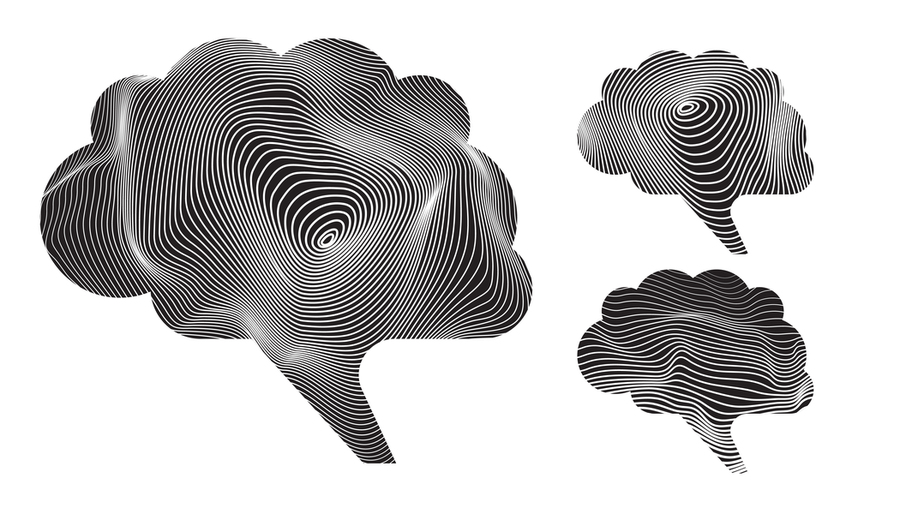
A new theory from MIT neuroscientists proposes that cognition and consciousness emerge in part from the brain’s use of traveling waves of neural activity to coordinate information processing. The review, published in The Journal of Neuroscience, argues that these waves enable analog computations that operate across neural networks with speed and flexibility.
The paper was written by Earl K. Miller, Scott L. Brincat and Jefferson E. Roy of MIT’s Picower Institute for Learning and Memory. Their argument builds on the idea that the brain’s synapses provide the structural basis for storing memories and representing goals, but cannot alone explain how the brain rapidly adapts to changing sensory conditions.
A central feature of the theory is “mixed selectivity,” in which individual neurons respond to multiple cues and contexts. This allows neurons to participate in overlapping functional networks, but also creates an organizational challenge: the brain must determine which groups of neurons should process particular information and when.
The researchers point to brain waves as a possible control system. In the account described by MIT News, slower alpha and beta waves are associated with memories and goals, while faster gamma waves represent incoming sensory information. Alpha and beta activity may regulate where and when gamma activity operates, effectively coordinating neural ensembles across both space and time.
The authors describe this as “spatiotemporal computing.” Unlike digital circuits, which generally perform calculations through sequential switches and gates, analog systems can process multiple relationships in parallel. The theory suggests that when traveling waves intersect, their interactions may add or subtract activity, creating a physical basis for analog computation in the cortex.
The proposed mechanism also includes ephaptic coupling, an electric-field-mediated process through which neural activity may influence nearby neurons without relying solely on synaptic connections. MIT researchers cited in the review have reported evidence that brain waves can both arise from neural spiking and rapidly affect the timing and coordination of subsequent spiking.
The consciousness claim is based on the idea that awareness emerges when these wave patterns organize widespread cortical activity into an integrated state. Evidence cited in the review includes work involving general anesthesia, in which three drugs with different molecular mechanisms were reported to disrupt brain-wave dynamics in similar ways while producing unconsciousness. The authors therefore argue that consciousness may depend more on the integrity of large-scale wave organization than on any single receptor or cell type.
The researchers emphasize that the proposal remains a theory. Miller said the next step is to look for direct signatures of analog computation in brain-wave patterns. The review also discusses the possibility of developing treatments based on manipulating brain-wave dynamics, but the supplied report does not establish such treatments as clinically effective. The work was supported by several organizations, including the National Institutes of Health, the U.S. Army Research Office, the U.S. Office of Naval Research and the Picower Institute.
Reporting Note
Biohack Report distinguishes preliminary findings, clinical evidence and commercial claims whenever the available reporting supports that distinction. Coverage is informational and is not medical advice.